The apostle Peter is known for two things (1) putting his foot in his mouth often and (2) delivering the sermon on the day of Pentecost in Acts 2. Those two events in Peter’s life are his most well-known, but also a testimony to his personal growth.
Peter followed Christ after his brother Andrew brought him to see Jesus (John 1.41-42). Who knew that fisherman from a small town in Galilee would follow the Messiah for three years, open his mouth too soon, yet stand before other followers of Jesus and deliver a message which would, through the power of God, convert over 3,000 people from the beginning. (Acts 2.41)
Who knew?
God knew. God knew that one person had the power to share a message and convert others.
Jesus knew. From their first meeting, Jesus called Peter “Cephas” which means rock. Whether it is a look into Peter’s character or his firmness in his beliefs, we know the word “rock” would mean greater things as the years went on. (Note Matthew 16.16-18)
What caused such growth in Peter? What caused Peter to go from being a fisherman to being a gospel preacher? What allowed Peter to go from an open mouth to preaching from an open heart?
Peter was not a PH.D. candidate, nor was he a theological scholar, yet the Jewish leaders noticed something about his life. They noticed that this “uneducated, common” man had been with Jesus. (Acts 4.13)
Because Peter spent time with Jesus, people saw his boldness and his life. Spending time with Jesus not only changed Peter’s life, but it will change your life.
How can you spend time with Jesus?
Open his words and spend time with His followers being encouraged together.
If you could strip away every program, every platform, and every plan, what would be left at the very core of ministry?
For Jesus, and for the early church, the answer was simple: people introducing people to Him. The heart of ministry was never about building an empire, but about building relationships that lead others to Christ.
The Power of a Simple Introduction
The Gospel of John gives us a beautiful glimpse into this kind of ministry. In John 1:40–42, Andrew, after spending just a short time with Jesus, immediately went to find his brother Simon (Peter) and brought him to Jesus. No fanfare, no marketing plan, no empire—just one person introducing another to the Savior.
“He first found his own brother Simon and said to him, ‘We have found the Messiah’… He brought him to Jesus.” (John 1:41–42, ESV)
Notice how personal this moment is. Andrew’s first instinct, after meeting Jesus, was to share Him with someone he loved. There’s no mention of Andrew seeking a title, a following, or a ministry brand. His focus was simply on connecting Peter with the One who could change his life.
Ministry Is About Jesus, Not Us
John the Baptist, a powerful figure in his own right, summed up the heart of ministry with remarkable humility:
“He must increase, but I must decrease.” (John 3:30)
John’s ministry was never about gathering crowds for himself. He was content to point people to Jesus, even when it meant stepping out of the spotlight. That’s a lesson for every minister and every Christian—our mission is to make Jesus known, not to make a name for ourselves.
The Temptation of Empire-Building
In today’s world, it’s easy to get caught up in numbers, platforms, and influence. There’s nothing wrong with growth or using tools that help us reach more people. But when the focus shifts from introducing people to Jesus to building our own “ministry empire,” we risk losing the heart of what ministry is all about.
Jesus Himself warned about storing up treasures on earth (Matthew 6:19–21). The true treasure is a life changed by the gospel, not the size of a following or the reach of a brand.
Every Christian’s Calling
Introducing people to Jesus isn’t just the job of ministers or pastors. It’s the calling of every believer. Sometimes, the most powerful ministry happens in quiet, everyday moments—over coffee, in a text message, or through a simple act of kindness.
As Dietrich Bonhoeffer once wrote, “The church is not a building, but a people.”
It’s not about the structures we build, but the lives we touch.
Action Steps
Reflect: Who first introduced you to Jesus? How did that change your life?
Pray: Ask God to show you someone in your life who needs an introduction to Jesus.
Act: Reach out this week—share a story, invite someone to read Scripture with you, or simply listen to their struggles.
Final Thought
The true heart of ministry is introducing people to Jesus. It’s not about building an empire, but about making Christ known, one relationship at a time. As you go about your week, remember: the greatest impact you can make may be in the simplest introduction.
Did You Get Anything from the Sermon or Bible Class?
As a minister, one question I think about during the week is, “What will people get out of this lesson?” Or “What did people get out of last week’s lesson?” Also, as a minister, I know some lessons are better than others and people listen and respond differently, but…did you get anything out of the sermon or the Bible class?
Allow me to offer a few suggestions that might help you to get something from a lesson:
What did you put into the lesson?
Did you prepare your mind before Sunday?
Did you open your mind to the message or be as a Pharisee (Matthew 15.1-9) or a mocker (Acts 17.32)?
Did you open your Bible and follow along?
Did you take notes on the message to review later?
Did you bring a proper attitude to worship?
Just another thought: The old saying rings true, “you get out of something what you put into it.”
Why Did You Come to Worship?
Do you not come to join with the saints in mutual fellowship and mutual worship to God the Father?
Do you not come to support the preaching of God’s Word or do you always look to see what you get from it?
Do you glorify God or seek self-glorification?
Where was your mind during the lesson?
Were you thinking of how to apply or know the message or were your thoughts on how much time you are wasting? (Attitude determines altitude)
What were two points listed during the message?
Can you recall three passages of scripture during the message?
Can you recall the title of the message?
These questions will not solve all the issues with listening to a sermon, but they provide a good start. Many times, people need to look internally before looking externally.
A few days ago, the church phone rang. A local funeral home was calling for a family requesting a church of Christ minister to perform a funeral, and the funeral would be the next day.
Over my brief years in ministry, this situation has happened various times. A loved one dies and it leaves the family with hard decisions, but many of those are quick decisions. Typically, without knowledge of an area, the family reaches out to a funeral home and asks them if they can find a minister. A few days ago, the call came to me.
Typically, these calls are unique. The one who passed may not have family in the immediate area, and the family needs some help. Other times, the family is unfamiliar with churches in the area, so they ask the funeral home to pick one. Still other times, like this one, the family is specific with their requests.
After clearing some time and moving some things around, I spoke with a member of the family regarding the loved one. He spoke of the quick decisions they needed to make in such a short period. Family would come in from another state, local friends may show up, but they were not sure. It was a confusing time for them.
Funerals are one of the difficult things to process in a time of a loved one’s death. There are decisions needing to be made, but the overwhelming thought of making those decisions, the cost and the time arrangements can be difficult.
Emotions run high at times like this. Families might see each other for the first time in many months or even years. Travel plans have been made as quickly as possible and the hope is everyone makes it and keeps it together.
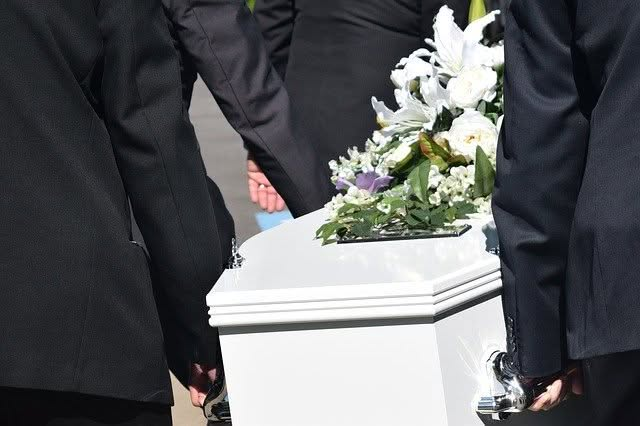
When I arrived at the funeral home, the mood was quiet. Various family members scattered throughout the viewing room were talking and catching up on old times. Some sat quiet; possibly in thought of the man lying in the casket. Still others were just there. Their facial expressions held no emotion. It was almost like it was a formality.
There are situations you talk about when getting an education to prepare you for those future moments, but there was never a course on how to handle situations like this. What is a preacher to say? How does a minister conduct a funeral of someone he does not know?
To add to the confusion for a moment, there was no obituary. The family had decided against one.
Typically, a preacher can gain some insights from an obituary. It lists the occupation, the family, hobbies, church affiliation or even a passing thought; but without an obituary, there is not much there.
So, what do you say in a time like this?
With no insights from the family, all I had to go on was a name, a birth date, and ending date and a church affiliation.
The morning before the funeral I poured over thoughts, articles and information about the eyes of this man’s life. The information was massive. The advancements in technology during his lifetime were staggering. The world events were historic.
The man was born 24 days after the bombing of Pearl Harbor. He grew up in the shadow of World War II. When he was 10 years old, the first coast-to-coast phone call was made in our country. He experienced the excitement as man Alan Shepard soared into space to become the first man in orbit. He would watch with others and man set foot on the moon. He would see prosperity and recession. His life would see many things.
Religiously, I know he attended church around here. His son, in a brief conversation, told me of growing up at a congregation near me. He spoke of his father’s attendance.
As the service began, I spoke of the times of the man’s upbringing and how things were different throughout his life. How many of the things he probably experienced seem odd to us today, yet he continued through those times.
Psalm 28 became my text. While some focus on Psalm 23, the end of Psalm 28 speaks volumes to someone who follows God.
Blessed be the Lord!
For he has heard the voice of my pleas for mercy.
The Lord is my strength and my shield;
in him my heart trusts, and I am helped;
my heart exults,
and with my song I give thanks to him.
The Lord is the strength of his people;
he is the saving refuge of his anointed.
Oh, save your people and bless your heritage!
Be their shepherd and carry them forever.
(Psalm 28.6-9; ESV)
What encouraging words of David as he speaks of the exceptional power and saving grace of God toward His people. David knew first-hand the protection and the mercy God has upon those who are His children.
While you are speaking, looking out over an audience wearing masks has been odd. It is difficult to read facial expressions because over half of a person’s face is covered. Preaching has been unique in this regard, but this funeral was a little more unique.
As I spoke of the protection of God, I noticed no tears. No one seemed to be emotional about the passing of this man. Instead, it was a little eerie.
Typically, you can still see people’s eyes and you can see them tear up or wipe their eyes, but not that day. No one made a sound. There was not even an allergy sniffle. You can blame it on Covid-19 the Coronavirus or whatever you want, but it was unique.
After the service was over, no one spoke. I spoke with the son one more time. He thanked me for my time and I told him it was my honor. Everyone went to their cars.
Driving home, my mind raced of the oddity that I had just experienced. What if that was my family?
Was there some big event that happened among the family and I did not know about?
Maybe everyone had already grieved and the funeral was a time of closure for them?
Maybe everyone was just in shock of the passing?
What if the family had no relationship with each other and they did not know how to act?
Maybe this man and said his goodbyes and gave the family a word of peace before he departed this life?
What if the family genes had no tear glands?
I was grasping at anything to make the situation better. Even today, several days removed from the event, it still crosses my mind.
I wonder what it will be like when one of my family members passes? Will the family show up? Will we stare at each other? Will we tear up knowing that someone has left the Earth?
What will it be like at my funeral? Will my children show up and talk? Will they give an emotional tear to me leaving this life? Will anyone even notice?
These questions are what some struggle with their entire life. I have seen it first hand in the lives of Christians and non-Christians. I have watched people hold on until the last moment because they did not know what would happen after they passed.
I have heard people tell their families to get along after they are gone. I have been asked to help families stay together after someone leaves the Earth.
Death is a mysterious event. For some, it is a blessing. For others, it is scary. Some cry on their way to the other side and others scream until they cannot scream anymore. It is just a mysterious event that each one of us will go through at some point.
How do you handle death?
The recent events of a man I did not know made my mind spin. I wonder about his family, his life, his last moments.
Being in ministry for 23 years now, I have learned a few things. One of those things being, you can learn much about a person or a group of people at a major life event; birth, death, baptism, etc. You can see how a family reacts and responds and see the relationship they have or have had.
My thought today is this, how is your family?
Some families will only be together at a funeral home. It might be a tragic event that brings them close.
My appeal to you is not to let that be the only time your family gathers.
Don’t let your next gathering be an oddity at the passing of a family member.
Several times a month, I will surf through the library of YouTube videos and watch a select few from my favorite speakers. Many of the videos I have seen countless times and some I almost know every word, but each time I hear them, the message is still powerful. The words still influence my heart and my actions. They will motivate me and inspire me for greater service. But where does the power live? Is it in the speaker or the message? Take a moment and look at the six items below and see “Six Powers Behind a Powerful Message.”
The speaker believed the message—In each of my favorite speeches throughout the years, each speaker believed (believes) the message they were presenting. Their belief came through in their actions, words, emotions and gestures. The belief of the speaker was so strong, some of it, if not all of it, was transferred to the listeners on every occasion. Without believing the words you are saying, your message will not fall on the listeners with power - it will just fall.
The speaker gave the audience time to think—Each famous speaker delivered the message in a way to give people time to think. The speaker presented words and offered solutions and even got personal, all the while allowing the listeners to hear and digest the words.
The speaker used breaks and pauses in the message—While this point relies heavily on point #2 (and vice versa), the power in a pause or a break in the speech will help the listeners digest and concentrate on the message. Pauses and breaks in a message not only give the listeners time to think, they convey the serious matters of the message. Try pausing for a small amount of time and see how many people look at you, waiting for the next words.
The message challenged the listeners—Ever wonder why some people can fall asleep in a sermon or at a conference? There are many reasons, but I am convinced there is another—we do not challenge them! You can attend seminar after seminar and never be challenged, and you will have just been to “another seminar.” But challenge the people with a message that makes them move their feet, and those people will tell everyone about the “event” they attended!
The message showed the listeners the future; whether good or bad—Remember the challenge of point #4—point #5 is the thought process. Showing your audience the future, no matter good or bad, makes them act! If you are selling them a product, then show them the efficiency they will have and the great sales they can make or the grand lifestyle they will live. If you want them to take action on something that has been wrong, show them where the dangerous road will lead and challenge them to change the course because of the consequences to come. Take your audience into the future and begin changing tomorrow today!
The message was the motivation for the people—Close your message by motivating the people to take action today, not tomorrow! The great messages of the past motivated the people to change at that very moment! Even in today’s society we are feeling the effects from people who took action hundreds of years ago because of their motivation to live better. Motivate your audience to achieve the next level- Leave them motivated!
These are just six points to get your mind racing toward becoming a greater speaker. Spend time this week and listen to those famous speeches of the past and see how these six points made a difference! Remember, to achieve greatness, you must put them into practice each day. In your next meeting or sales opportunity, try two these steps and see how they work for you. It will take some practice, but practice is necessary for achievement!
Enjoy your day!
Just some thoughts,
OurWork
Sign-up for our email newsletter and receive a few of our resources as a thank you for being a part of our efforts. Sign up here!
I hope every member considers one another this morning. There will be someone at services who has had a horrible week and will not tell anyone. They will put on a face of joy, but deep down their heart breaks. I wonder if they will ask their spiritual family to pray for them. (Hebrews 3:13)
I hope someone gets a fresh start this morning. Someone needs a fresh start and Christ provides that in baptism. His blood cleanses each one from sin and allows them to begin as a new person in Christ. (Romans 6)
I hope each member welcomes visitors into our assemblies. It is hard enough visiting, but it can be made harder when no one speaks to you. May our brethren stretch forth their hands to welcome those who visit.
I hope each member understands the brief sermon is presented after countless hours of thoughts, prayers and study. Even though it is over in 30 minutes, the knowledge it contains will reach to eternity.
I hope every minister knows they are loved. Whether it be the outpouring from the brethren or the encouraging words of a visitor, I hope each minister knows God cares for them and will always watch over them.
I hope to see my brethren in services, but if not, I hope they reach out to the ones who are absent; a card, note or call is an uplifting message to those who cannot make it to services.