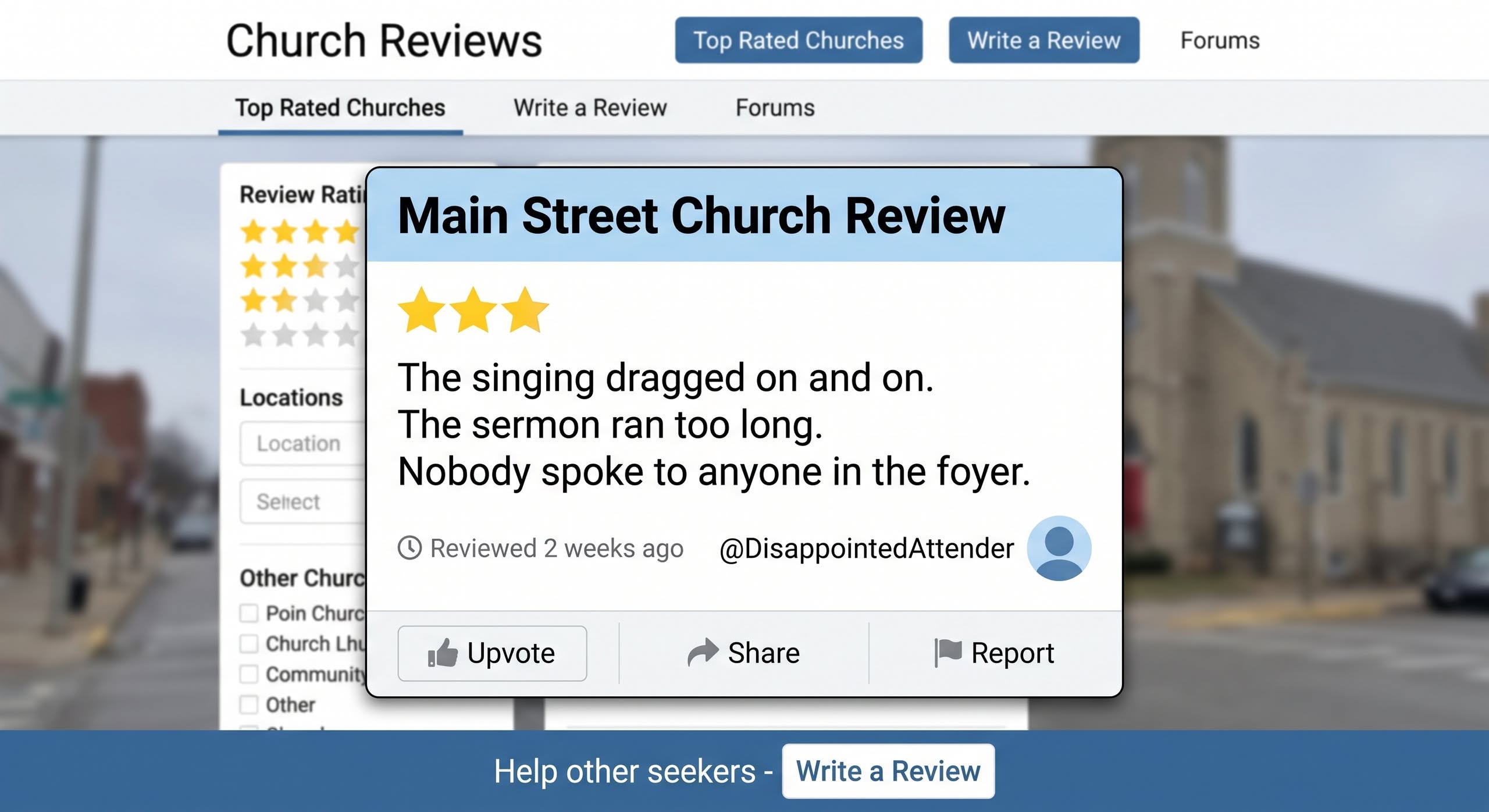
Some folks treat the church like a restaurant. You come in, you get served, and you leave a review on the drive home. The singing dragged on and on. The sermon ran too long. Nobody spoke to anyone in the foyer. Three stars.
Paul had a different picture. Paul says that God gave apostles, evangelists, shepherds, and teachers “to equip the saints for the work of ministry, for building up the body of Christ” (Ephesians 4:12). The ministry belongs to the saints. If you have been baptized into Christ, that means you.
The body grows “when each part is working properly,” and it “builds itself up in love” (Ephesians 4:16). Nobody grows up in Christ as a solo act, because “the eye cannot say to the hand, ‘I have no need of you'” (1 Corinthians 12:21). Most of the teaching Hebrews 5:12 talks about will never happen behind a lectern. It happens at a kitchen table, in a text message, in a hospital room, or sitting beside a new Christian in Bible class.
Love is the climate where Christians grow. A greenhouse works because the conditions are right. That is why Paul wrote, “Therefore encourage one another and build one another up, just as you are doing” (1 Thessalonians 5:11).
Here is a habit that helps: the Monthly Four. At the start of the month, pick four people. Pray for them by name. Find them at services. Send each of them a card. October just started, so you are right on time.
Start with one today. Name the person, then call them, write them, or sit with them this week. That is the body building itself up in love, one joint at a time.
We love to measure ourselves against the folks around us. Somebody is always a little shorter than we are.
Paul will not let us do that. The goal is “mature manhood, to the measure of the stature of the fullness of Christ” (Ephesians 4:13). The pencil mark is set at the height of Jesus, not the person on the next pew. When you understand this, it humbles you, because nobody has arrived. It should also encourage you, because there is always more of Christ to grow into.
Growth has a direction. We are to “grow up in every way into him who is the head, into Christ” (Ephesians 4:15). More activity is not automatically growth. A weed grows fast too. There is a difference in accomplishment and activity. It is just growing the wrong way. A garden vine needs a trellis to give its growth a direction, and Christ is where yours is supposed to point.
Growing into Him means holding truth and love together, “speaking the truth in love” (Ephesians 4:15). All truth and no love turns you into a hammer. All love and no truth turns you into a pillow. Jesus was “full of grace and truth” (John 1:14), both at once.
Watch Peter. He left his nets, sank in the water, swung a sword, and denied his Lord. Jesus restored him beside a charcoal fire (John 21:15-17). Less than two months after the cross, he preached on Pentecost. The last line he wrote to the church was “But grow in the grace and knowledge of our Lord and Savior Jesus Christ” (2 Peter 3:18).
Think of one person you have been a hammer with, or a pillow with, and go make it right this week, with truth and love in the same conversation.
Look more like Jesus this October than you did last October.
Have you ever wondered how long it would take to find a bottle thrown into the sea?
On February 23, 2019, Jim Duke and his wife, Candy, were walking along the beach in Corpus Christi, Texas. During their walk, they discovered an old, well-worn bottle washed ashore. Intrigued, they carefully removed the cork and found a postcard inside.
The postcard instructed the finder to mail it immediately for a 50-cent reward. It was one of 1,796 bottles dropped across the western half of the Gulf of Mexico over several days in 1962 and 1963. The bottles were part of a “drift study” conducted by the U.S. Bureau of Commercial Fisheries, now known as the National Marine Fisheries Service. Since the “drift study”, satellites and GPS have rendered such studies obsolete.
Just think, four months before President Kennedy declared to a Houston crowd in 1962, “We choose to go to the Moon,” this bottle was set adrift and had been drifting ever since. It had been nearly 60 years. Who knows where this bottle had traveled or where it would end up?
Without direction, people face the same risk as this bottle. They float through life aimlessly, without a specific destination or purpose. Even Christians, without direction, can find themselves wandering through life, lost.
Thanks be to God, the Father, for sending His Son to show us the way. We know that Jesus is “the way, the truth, and the life” for us today (John 14:6). The early church recognized that Jesus was the Savior, and that salvation was found only through Him (Acts 4:12).
Are you wandering like a bottle in the sea? Or are you in the path leading to heaven and moving with purposeful actions?
Shame is a silent weight many of us carry daily. It is the one that tells us we’re defined by our failures and keeps us from truly experiencing God’s grace.
From the very start, shame entered the human story. When Adam and Eve sinned, they hid from God in the garden (Genesis 3.8-10), feeling exposed and unworthy. Even today, shame convinces us we’re unlovable, making us want to hide from God and others. But Jesus meets us right where we are, not with condemnation, but with grace. In John 8.1-11, He restores a woman caught in sin, telling her, “Neither do I condemn you.” God’s heart is to remove our shame, not to reinforce it. Isaiah 54.4 encourages us: “Do not be ashamed… you will forget the shame of your youth.” In Christ, our identity is completely transformed. “If anyone is in Christ, he is a new creation…” (2 Corinthians 5.17). God doesn’t just cover our shame, He removes it, making us radiant (Psalm 34.4-5) and rejoicing over us (Zephaniah 3.17).
If you’re carrying shame, bring it to God in prayer. Consider sharing your story with someone safe. Shame loses power when brought into the light. Replace shame’s lies with God’s truth. You were never meant to bear this burden. In Christ, you are loved, forgiven, and free.
Shame is a heavy burden. It is one that warps our sense of identity and quietly distances us from the love and freedom God intends. Unlike guilt, which says, “I did something wrong,” shame whispers, “I am wrong.” It’s a spiritual stain that convinces us we’re defined by our failures, past mistakes, or what others have said about us. But here’s the good news: you were never meant to carry the weight of shame, and in Christ, you don’t have to.
What step will you take this week to let go of shame and embrace your true identity?
We all know what it feels like to wander. Sometimes, we lose sight of what we have until we find ourselves far from home, longing for the comfort and love we once knew. The story of the prodigal son (Luke 15:11-32) isn’t just about mistakes and mercy; it’s a powerful lesson in gratitude, especially when we finally come home to the Father.
When the prodigal son returned, he wasn’t just seeking forgiveness. It was the grace and love of his father overwhelmed him. Jesus’ words remind us that our Father’s arms are always open, ready to welcome us with compassion and joy. “But while he was still a long way off, his father saw him and was filled with compassion for him; he ran to his son, threw his arms around him and kissed him.” (Luke 15.20)
Four Practical Ways to Be More Grateful
#1 – Reflect on God’s Grace – Take time each day to remember how God has welcomed you back. Gratitude grows when we recall the moments we’ve been forgiven and loved beyond what we deserve. (Ephesians 2.8-9)
#2 – Express Thanks in Prayer – Make thanksgiving a part of your prayers and life. Thank God for specific blessings and let your gratitude shape your attitude. (Philippians 4.6)
#3 – Serve Others with Joy – Like the father celebrated with a feast, share your gratitude through actions. Serving others is a response to the love you’ve received. (John 13.34-35)
#4 – Share Your Story – The prodigal son’s story is powerful because it’s honest. Don’t be afraid to share how God has welcomed you home. Your story can inspire gratitude in someone else’s heart. (Matthew 5.16)
Gratitude isn’t about ignoring life’s struggles, it’s about seeing God’s faithfulness during them. Like the son who returned home, we can choose to focus on the love that welcomes us, the grace that covers us, and the hope that sustains us. Jesus invites us to come home, to be filled with gratitude, and to live each day with a thankful heart.