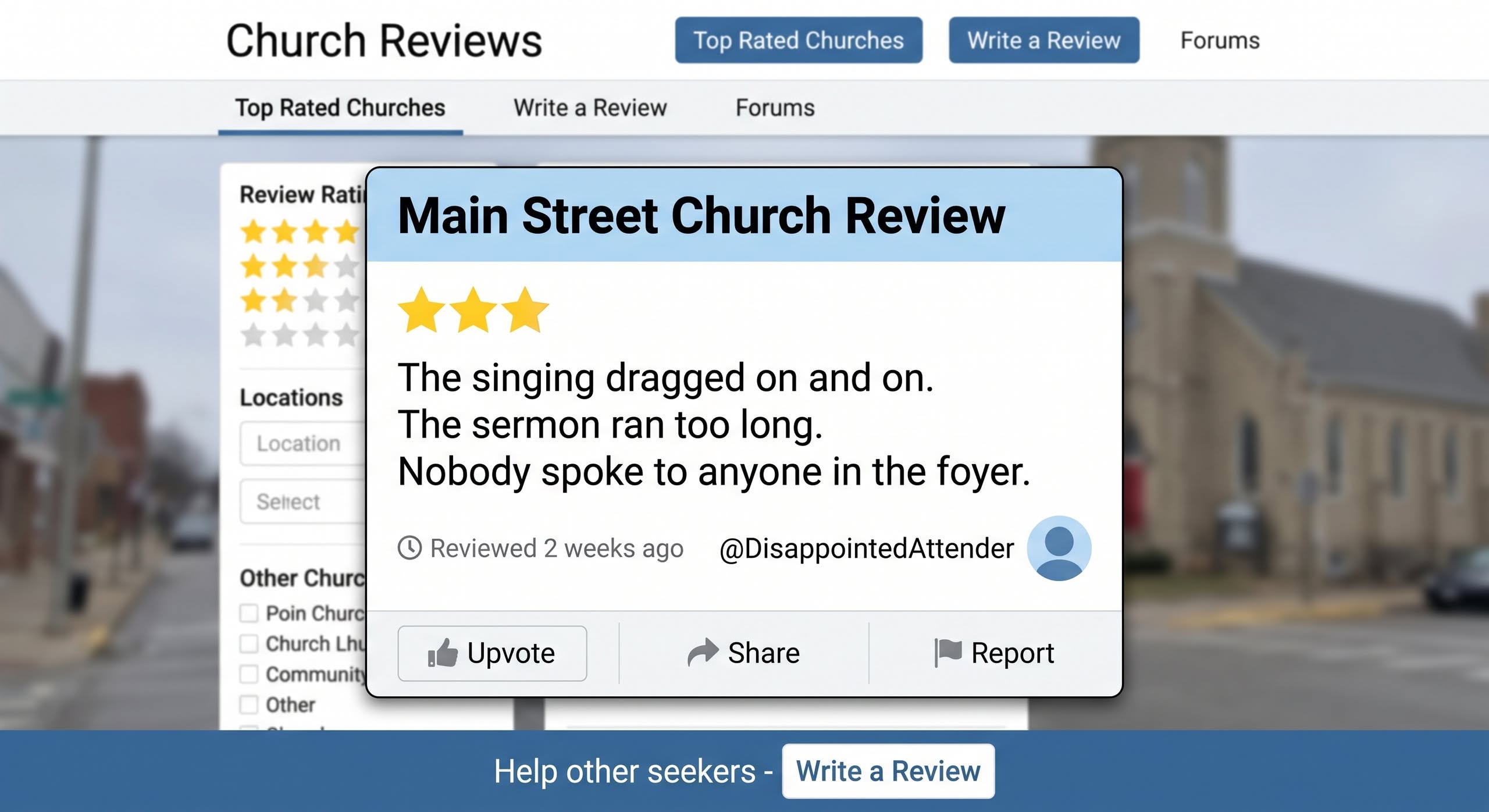
A Loving Call to Return

As a minister, there are things that are difficult to hear and things difficult to say. The words below come from a grateful and gracious heart. However, they are challenging and might be disliked by some.

Maybe these words resonate with you. Maybe, just maybe, you need to say these words.

They are my thoughts. Just mine. This is not a letter from the congregation, or any congregation; it is just some thoughts in letter form.


A Letter to Those We Miss

To those who once walked beside us in worship and fellowship:

We want you to know that you are missed. Not just your presence in a pew, but you—your voice, your encouragement, your place in the family of God. We remember the days when your faith was strong and your commitment was steady. Those memories are still precious to us.

But we also need to speak honestly.

Over time, it has become clear that many who once claimed to know Jesus no longer desire to walk with Him. The words “I’ll be there tomorrow” have become empty promises—filler words that never lead to a changed life.

We have watched people we love drift, not because they don’t know the truth, but because they no longer want to follow it.

We have reached out. We have prayed. We have encouraged. We have called, texted, visited, and waited. Yet, the response has been silence—distance—being “ghosted” by those who once called the congregation home.

We say this with humility; we cannot help someone who does not want to be helped. Even Jesus let people walk away, and when He sent His disciples out, He told them that if a town refused to receive the message, they were to shake the dust off their feet and move on.

There comes a time when Christians must do the same.

Not out of anger. Not out of pride. But out of obedience and spiritual health. Constant rejection eventually becomes discouragement, and discouragement can drain the very people who are trying to do good.

Still, hear this clearly: “You are loved. You are wanted. You are invited back.”

If you ever choose to return to Jesus, we will rejoice. If you ever decide to come home, we will welcome you with open arms. But until that day, we must continue the work God has given us, focusing on those who are hungry for spiritual growth and ready to walk in the light.

We pray for you. We hope for you. Now, we release you to God’s care.

And if the day comes when your heart turns back toward Him, we will be here—ready to walk with you again.

You are being prayed for today.


The Cross Before Jesus – Crucifixion Series #1

Long before the cross became a symbol of hope, it was a symbol of terror. Long before it was worn around the neck, it was feared in the streets.

Crucifixion did not begin with Jesus, nor was it invented for Him. It was a punishment shaped and sharpened by empires who understood that fear could control a population far more effectively than force. The Persians used early forms of it. The Carthaginians practiced it. The Greeks employed it. But it was Rome—the iron‑fisted empire of law, order, and intimidation—that perfected it.

Rome did not choose crucifixion because it was efficient. They chose it because it was slow, public, it humiliated the condemned, and it warned the watching world. A Roman execution was never meant to be hidden away. It was meant to be seen, remembered, and feared. The cross was Rome’s billboard, its message to every slave, rebel, and outsider: “This is what happens when you defy us.”

Crucifixion was not for everyone. In fact, it was not for most people.

Roman citizens were almost always exempt; the empire considered the method too degrading for its own. Instead, the cross was reserved for the lowest classes and the most despised offenders—slaves who resisted, rebels who rose up, violent criminals who threatened order, and anyone Rome wanted to make an example of. It was a punishment for the guilty, the dangerous, the unwanted. It was the empire’s way of saying, “You are beneath dignity, beneath mercy, beneath Rome.”

This is what makes the story of Jesus so striking. He did not die the death of a respected teacher. He did not die the death of a philosopher or a prophet. He died the death of the guilty. He died the death of the violent. He died the death of the rebel. He died the death Rome reserved for those it considered the worst of humanity. And yet, He was innocent.

Understanding the history of the cross forces us to see the weight of what Jesus carried. The cross was not a religious symbol in His day. It was not polished, carved, or decorative. It was not worn as jewelry or displayed as art. It was an instrument of shame, suffering, and slow death. When Jesus spoke of taking up a cross, His listeners did not think of a necklace. They thought of a death march.

This is why the statement matters: Jesus did not wear a cross on His neck. He wore it on His back. He carried the instrument of His own execution through the streets of a city that rejected Him. He stepped into the place of the guilty, though He was innocent. He accepted the punishment reserved for the worst, though He was the best. He took on the death sentence that belonged to others, and He did it willingly.

Before we ever reach Golgotha, before we ever see the nails or the sign above His head, we must understand the world that shaped the cross. Only then do we begin to grasp the depth of what Jesus endured. Only then do we see that the cross was not an ornament—it was obedience. It was not a symbol—it was a sentence. And the One who carried it did so not because He deserved it, but because we did.

Just some thoughts,


Finding Purpose, Building Hope, and Stepping into What’s Next

A Season of Acceleration

Warning—yes, a good kind of warning.

Over the next eight months, I’m stepping up in every area of my calling.

I’ll be increasing my efforts in local ministry and in my personal ministry through Preacher’s Pen, while also expanding the reach of 4031 Coaching and Gratitude Media Group. Every part of this is driven by one mission: “to help others create better days today for better lives tomorrow.”

This isn’t a new desire. It’s something that has been growing in me for years. For years, I have carried a deep desire to reach people, encourage them, and help them move toward something better. That desire is rooted in a simple belief: every person needs hope, every person needs purpose, and every person needs to know they were created for more.

4031 Coaching - Preacher's Pen

Why I Do What I Do

I entered ministry because I believe every person needs to know Jesus, discover their purpose, and find hope again. We were created by a God who gives calling, ability, and meaning. None of us are here by accident.

When we connect with our Creator, we begin to understand who we are and why we are here. We begin to see that even in hard seasons, our lives still matter. Even in uncertainty, there is direction. Even in pain, there is still hope for tomorrow.

That conviction is what led me to build 4031 Coaching, rooted in Isaiah 40:31.
From that verse, I see four stages of life—Wait, Walk, Run, and Soar.

I see a framework that has shaped my thinking about growth and life: Wait, Walk, Run, Soar.

  • Wait reminds us to trust God and rest in His presence.
  • Walk teaches us to take faithful steps forward.
  • Run calls us to move with courage and conviction.
  • Soar points us toward the strength and freedom God gives.

Each stage matters. Each stage has purpose. And in every stage, God is present.

When we wait on Him, He strengthens us.
When we walk with Him, He guides us.
When we run toward His calling, He empowers us.
And when we soar, He carries us higher than we imagined.

I believe God wants us near Him. When we wait on Him, He renews us, steadies us, and carries us through what we cannot handle alone.

Building Tools That Lift Others Up

Alongside ministry and coaching, Gratitude Media Group exists to help small congregations and Christian businesses grow through websites, marketing, and creative design. It’s another way to serve, support, and strengthen the Kingdom.

As all these efforts grow, I plan to release hundreds of resources—articles, videos, graphics, devotionals, coaching tools, and more. There are many ways to reach people, and I want to use every one of them.

Why Create Income Outside of Ministry?

Some have asked why I don’t simply keep everything under the umbrella of ministry. The answer is that while ministry will always be part of who I am, I also want to build income through coaching, entrepreneurship, and service-based work outside of ministry.

The truth is—I could. But I see a bigger picture.

Why does that matter so much to me?

By creating income outside of ministry, I free up the financial support I currently receive from congregations so it can be redirected to areas that matter deeply to God:

  • Caring for widows
  • Supporting orphans
  • Helping the elderly
  • Meeting the needs of the struggling and overlooked

This isn’t about stepping away from ministry.

It’s about expanding ministry.

It’s about building something sustainable so the church can do what the church is called to do.

My heart is to see more support given to those who are often overlooked.

A Bigger Dream: Caring for Those Who Have Served

For years, a deep desire has been growing in me: “To create a nonprofit that provides housing and care for aging ministers and their wives—those who have poured out their lives for the church and often find themselves with little support in their later years.”

Imagine a small, one-level apartment community where:

  • Ministers and their spouses can live with dignity
  • Costs are covered or reduced
  • The elderly in the church are cared for
  • Integrity is practiced by caring for those who cared for us

That dream runs deep.

A Place of Rest for Ministers

I also have a passion for preachers—especially those serving in small congregations, working tirelessly with little support. I dream of creating a place where ministers and their families can come for a short sabbatical:

  • A week or two of rest
  • A place to breathe
  • Encouragement for their souls
  • Support for their families
  • A retreat where they can be served instead of serving

One day, I’d love to see a conference center built for this purpose—workshops, support groups, shared wisdom, and a community of ministers lifting one another up.

These dreams will take resources.

That’s where 4031 Coaching, Gratitude Media Group, and speaking opportunities come in.

They’re not just projects—they’re pathways to something bigger than me.

Why I Am Pressing Forward

I know visions like these require resources, time, and teamwork. That is part of why I am pressing harder into local ministry, personal ministry through Preacher’s Pen, 4031 Coaching, Gratitude Media Group, and speaking opportunities. I want these efforts to serve something greater than myself.

Maybe you do not need my services personally, but perhaps you know someone who needs encouragement, direction, hope, or support. My prayer is that what I share this year will not stop with one person, but will reach many others through those willing to share, support, and pray.This year, I want to share enough that you have something worth sharing with others.

I need a team—people willing to share, encourage, pray, and help spread the message of hope and purpose.

Life Hasn’t Been Easy—But God Has Been Faithful

here is so much in this world that can weigh us down. But there is also still light. There is still goodness. There is still a reason to keep going.

I’m 51 years into this journey. I’ve seen the good, the great, the bad, the ugly, and the downright painful. I’ve been knocked down, run over, and dragged through the mud. But every time, without fail, the Son shines after the storm.

There is always light ahead.
There is always hope for tomorrow.

My purpose is not to draw attention to myself, but to point people to the Almighty—the One who is faithful, just, kind, and loving.

I don’t have all the answers.
But I know the One who does.

The Next 51 Years

If God allows, the next half of my life will be marked by momentum, purpose, and forward motion. I’ll want to quit at times. I’ll get tired. But He is greater, and this is about Him.

I’ve messed up. I’ve sinned. I’ve disappointed God and others. I haven’t always done what I should. But I’m learning. And now, the lessons of these 51 years are coming together.

There is hope.
There is purpose.
There is life.

Let’s Move Forward Together

No matter where you have been, no matter what you are carrying, and no matter how uncertain tomorrow may feel, your life still matters. Your story is not over. There is still good ahead.

Let us keep going. Let us keep serving. Let us keep believing.

I’m stepping into this next season with faith, courage, and expectation.
And I’d love for you to walk with me.

Let’s lift others up.
Let’s build something meaningful.
Let’s create better days today for better lives tomorrow.

Let’s do this.

From Convenience to Conviction

From Convenience to Conviction: A Call for the Church to Move Today

For generations, faith has shaped families, communities, and entire cultures. But somewhere along the way, something subtle happened: religion became convenient. Not necessarily evil. Not intentionally shallow. Just… easy. And convenience, while comfortable, rarely produces conviction.

When Faith Becomes Convenient

Convenient religion shows up quietly. It doesn’t demand much, and it rarely disrupts our routines. It lets us feel spiritual without requiring spiritual formation.

Here are a few ways convenience has crept in:

  • Convenient attendance: We gather when it fits the schedule, not because we hunger for God (Hebrews 10:24–25).
  • Convenient discipleship: We like verses that comfort us but avoid the ones that confront us (2 Timothy 4:3).
  • Convenient service: We help when it’s easy, but step back when it costs time, energy, or comfort (Luke 10:31–32).
  • Convenient convictions: We stand for truth until truth becomes unpopular (Galatians 1:10).

Convenience is subtle because it feels harmless. But over time, it produces a faith that is soft, shallow, and easily shaken.

The Call Back to Conviction

Conviction is different. Conviction is costly. Conviction is steady. Conviction is rooted in something deeper than preference—it’s rooted in truth.

Scripture consistently calls God’s people to a faith built on conviction:

  • Daniel prayed even when it meant the lions’ den (Daniel 6:10).
  • Peter and John spoke boldly even when commanded to be silent (Acts 4:18–20).
  • The early church gathered, gave, served, and sacrificed because they were “devoted” (Acts 2:42–47).
  • Jesus Himself set His face toward the cross with unwavering resolve (Luke 9:51).

Conviction doesn’t ask, “Is this easy?”

Conviction asks, “Is this faithful?”

What Conviction Looks Like Today

Conviction in the modern church might look like:

  • Worship that is a priority, not an option.
  • Bible reading that shapes our decisions, not just our emotions.
  • Service that stretches us, not just fits our schedule.
  • Generosity that reflects trust, not leftover giving.
  • Holiness that stands firm, even when culture shifts.
  • Love that is sacrificial, not selective.

Conviction is not louder—it’s deeper. It’s not aggressive—it’s anchored. It’s not about being stubborn—it’s about being surrendered.

Why This Matters

Jesus warned about a faith that looks alive but is spiritually weak (Revelation 3:1–2). Paul urged believers to be “steadfast, immovable” (1 Corinthians 15:58). James reminded us that faith without works is dead (James 2:17).

Convenience produces spectators.

Conviction produces disciples.

And the world doesn’t need more spectators.

A Challenge for Today

Maybe the question for the church today is simple:  Are we living by convenience or conviction?

Convenience asks for comfort.

Conviction asks for commitment.

Convenience fits God into life.

Conviction builds life around God.

Convenience fades.

Conviction endures.

May we be a people who choose the narrow road, the deeper faith, the costly obedience, and the unshakable conviction that Christ is worth everything.

Just some thoughts,


New Beginnings (A Quick Look into Genesis)

Genesis is often called the book of beginnings. In its pages we see the beginning of the world (Genesis 1–2), the beginning of sin (Genesis 3), the beginning of family life and childbirth (Genesis 4), and even the beginning of nations (Genesis 10–11). As a new year sits in front of us, Genesis helps us to see fresh starts the way God sees them: not as wishful thinking, but as real opportunities to walk with Him.

First, Genesis reminds us that God brings beginnings out of nothing. “In the beginning God created the heavens and the earth” (Genesis 1:1). In seven days, the Lord formed light and darkness, sky and seas, land and vegetation, sun and moon, birds and fish, animals and man — then He rested (Genesis 1:3–2:3). Who else can take nothing and make something?

Every sunrise, every season, and every breath is a quiet reminder that God is powerful, purposeful, and generous.

Second, Genesis shows that God can give a new beginning after great failure. In Noah’s day, evil filled the earth (Genesis 6:1–5, 11–12). However, God saw Noah as a righteous man and preserved him and his family (Genesis 6–8). After the flood, God made a promise and set a rainbow as a sign (Genesis 9). Righteousness still matters, and God still honors it.

Third, Joseph teaches us that new beginnings don’t always feel “new” at first. Betrayed and taken to a foreign land, Joseph’s path looked like loss, but God used it for blessing. Even Pharaoh recognized God’s hand in him (Genesis 41). Joseph’s faithfulness positioned him to save his family (Genesis 46–50).

So, what about our new beginning? Every day is a gift — “If the Lord wills” (James 4:15). Tomorrow isn’t promised (Luke 12:13–21). Today is the day to seek forgiveness, share the gospel, and set our lives in order.

The greatest new beginning is becoming a new person in Christ (John 3; Ephesians 2). God offers salvation daily. What will your response be?

Just some thoughts,


It’s Easier to Keep Holidays Than Commandments

“How many observe Christ’s birthday! How few, his precepts! O! ’tis easier to keep holidays than commandments.” — Benjamin Franklin

That quote stings—because it’s true often enough to make us uncomfortable.Every year, Christmas arrives with lights, music, traditions, and a calendar that almost forces us to pause. And there’s nothing wrong with celebrating. Remembering the coming of Jesus into the world is a beautiful thing.

But Franklin’s point is worth sitting with: it’s easier to observe a holiday than it is to obey a Savior.

Holidays are simple. Discipleship is daily.

A holiday asks for a moment. A commandment asks for a life. It’s one thing to sing about peace on earth. It’s another thing to pursue peace when you’re misunderstood, overlooked, or hurt.

Jesus didn’t come merely to be admired once a year—He came to be followed every day. Remember these verses…

    • “If you love Me, you will keep My commandments.” (John 14:15, ESV)
    • “Why do you call me ‘Lord, Lord,’ and not do what I tell you?” (Luke 6:46, ESV)

Don’t soften that. Jesus is not asking for seasonal affection. He is calling for daily obedience.

Here’s the direct challenge:

Are you obeying Jesus—or just observing Him?

It’s possible to honor Jesus with our words while ignoring Him with our choices. The Pharisees were told, “This people honors Me with their lips, but their heart is far from Me.” (Matthew 15:8, ESV)

So let’s make it plain: If your faith is strongest in December but weak in January, you’re not celebrating Christ—you’re compartmentalizing Him.

Christmas can become a spiritual substitute: something that feels meaningful but doesn’t actually change you.

Commandments aren’t chains—they’re the proof of who is the Lord’s

We live in a time that loves inspiration but resists instruction. We want comfort without correction. But Jesus doesn’t offer a “holiday Jesus.” He offers a King.

    •  “Not everyone who says to Me, ‘Lord, Lord,’ will enter the kingdom of heaven, but the one who does the will of my Father who is in heaven.” (Matthew 7:21, ESV)

That verse isn’t there to make tender hearts panic. It’s there to keep careless hearts from pretending.

And yes—when we fail (because we do), the answer isn’t to quit. It’s to repent and return.

    • “If we confess our sins, He is faithful and just to forgive us our sins and to cleanse us from all unrighteousness.” (1 John 1:9, ESV)

Five “after-Christmas” commandments to measure your walk

If you want to honor Christ beyond the season, don’t start with vague intentions. Start with obedience you can actually practice.

    • Love God first: “You shall love the Lord your God with all your heart and with all your soul and with all your mind.” (Matthew 22:37, ESV)
    • Love people in a way they can feel: “A new commandment I give to you, that you love one another: just as I have loved you…” (John 13:34–35, ESV)
    • Forgive instead of keeping score: “Forgive, and you will be forgiven.” (Luke 6:37, ESV)
    • Seek the Kingdom before comfort: “But seek first the kingdom of God and His righteousness…” (Matthew 6:33, ESV)
    • Do the Word, don’t just consume it: “But be doers of the word, and not hearers only, deceiving yourselves.” (James 1:22, ESV)

Those aren’t “nice ideas.”

They’re commands.

And they reveal who’s really on the throne.

A 7-day obedience test (no excuses)

Here’s your challenge for this week:

  1. Pick one command of Jesus you’ve been delaying.
  2. Write it down.
  3. Pray for strength.
  4. Obey it today—then repeat for 7 days.

Not perfectly. But honestly.

Because discipleship isn’t proven by what you post, what you sing, or what you attend.

    • “If anyone would come after Me, let him deny himself and take up his cross daily and follow Me.” (Luke 9:23, ESV)

That word daily makes it real.

Celebrate the birth of Jesus—then live like He’s Lord

Christmas reminds us that God stepped into our world. That’s worth celebrating.

But the best way to honor Christ isn’t only with a day on the calendar.

It’s with a life that says, “Jesus, you’re not just part of my season—you’re the center of my life.”

So yes—keep the holiday.

But even more: keep the commandments.

Not out of guilt.

Out of love.

And if you’re ready to get serious, don’t wait for a new year. Obedience doesn’t need a fresh calendar—just a surrendered heart.

Just a thought,