Six Things to Consider: Biblical Priorities for a Fruitful Year

A new year has a way of waking up our “goal-setting” side. We plan, we list, we promise ourselves we’ll do better. But Jesus gives us a better starting point than willpower: abiding. In John 15, He reminds us that real fruit doesn’t come from trying harder—it comes from staying close to Him.

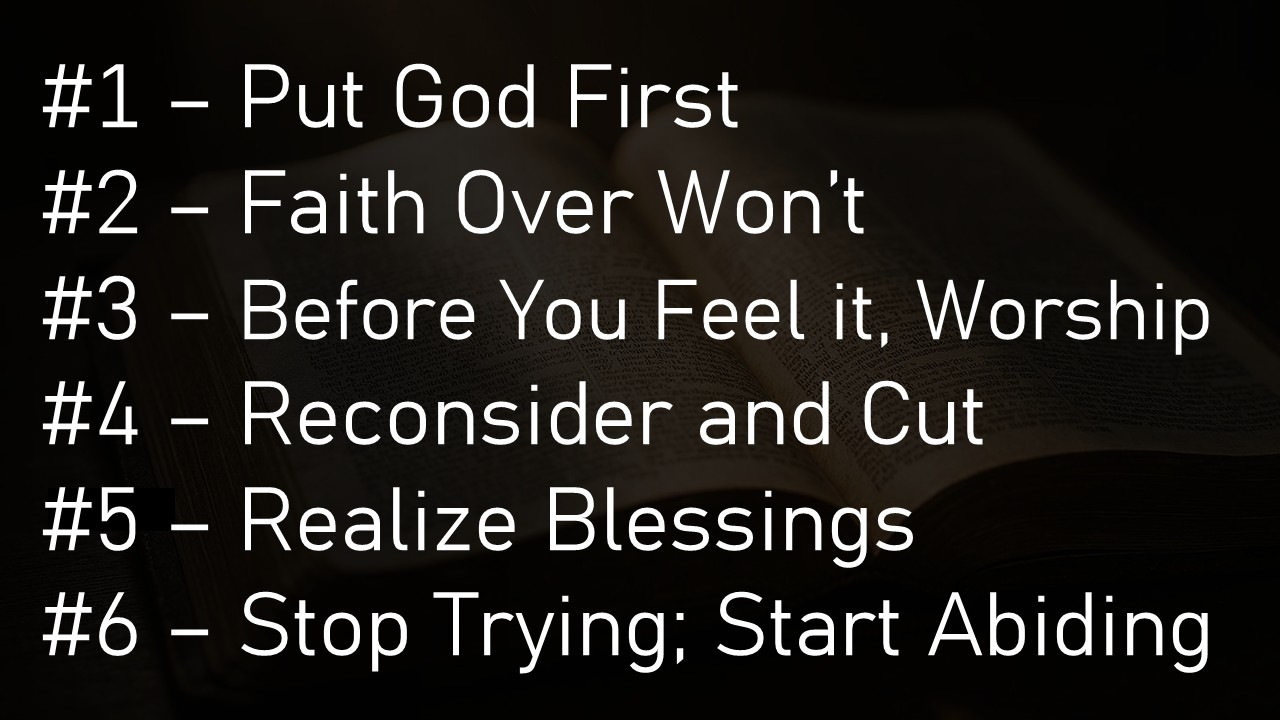
Here are six biblical priorities to consider if you want a fruitful year marked by spiritual growth and meaningful living.

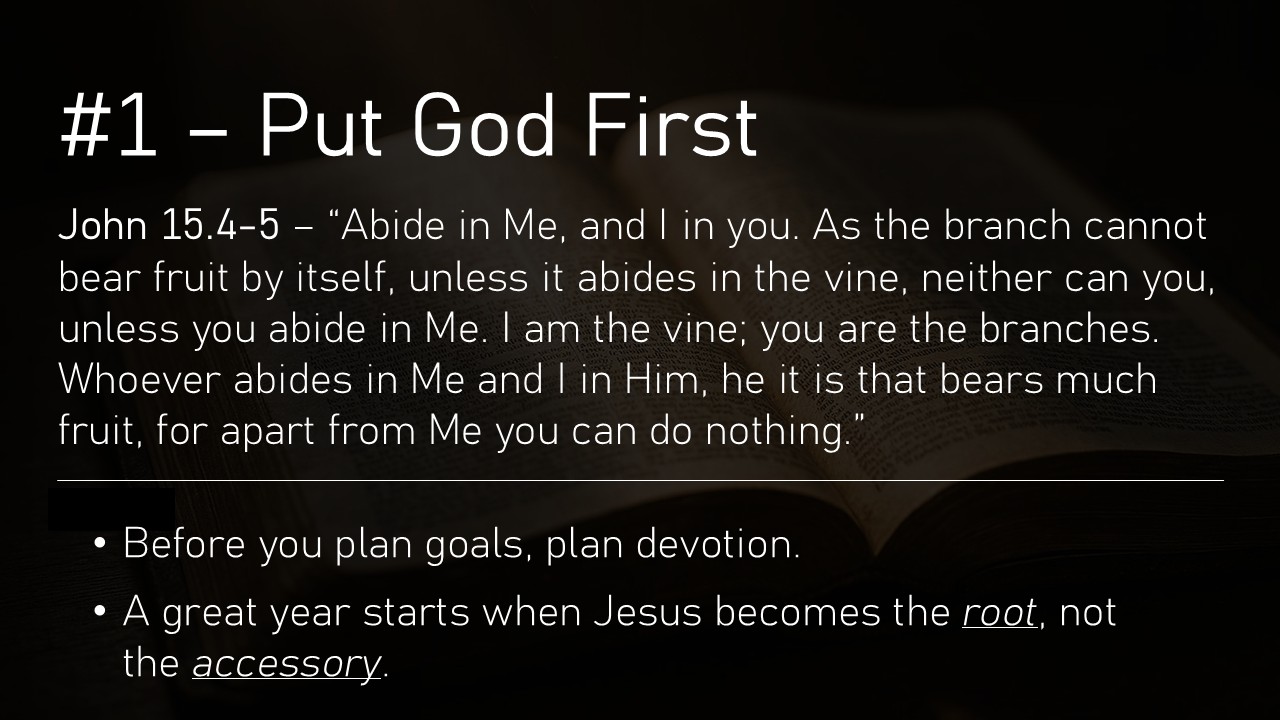
#1 – Put God First

Jesus says, “Abide in Me… whoever abides in Me and I in him… bears much fruit” (John 15:4–5). Before you plan goals, plan devotion. A great year starts when Jesus becomes the root, not the accessory. If your schedule is full but your soul is empty, the order needs to change.

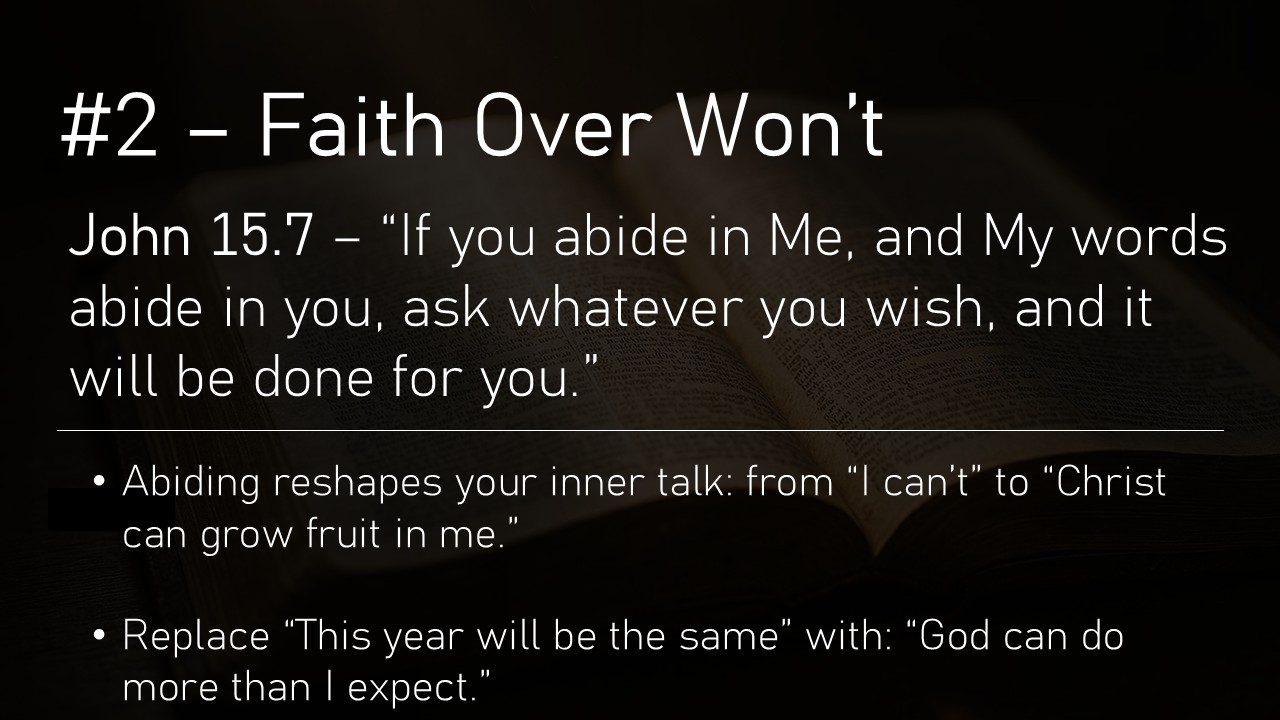
#2 – Choose Faith Over “Won’t”

John 15:7 connects abiding with prayer and confidence: “If you abide in Me… ask whatever you wish.” Abiding reshapes your inner talk—from “I can’t” to “Christ can grow fruit in me.” Replace “This year will be the same” with “God can do more than I expect.” Faith doesn’t deny reality; it invites God into it.

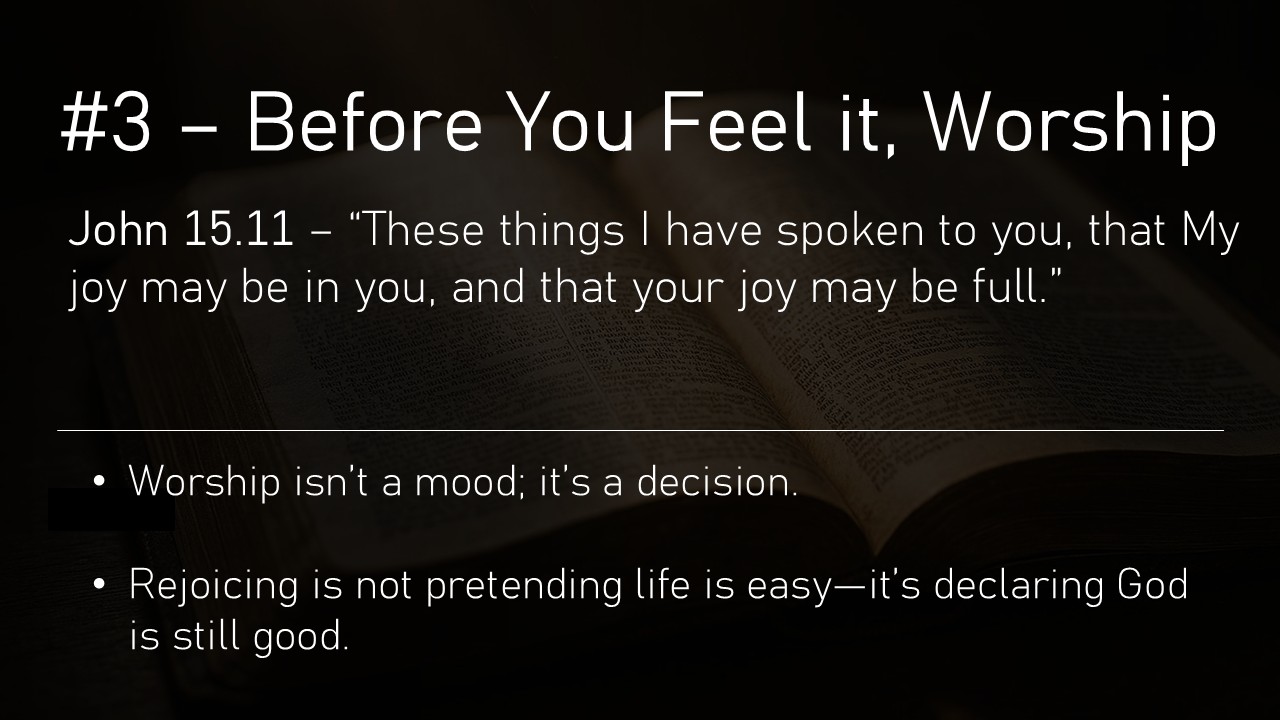
#3 – Worship Before You Feel It

Jesus also speaks about joy: “that My joy may be in you, and that your joy may be full” (John 15:11). Worship isn’t a mood; it’s a decision. Rejoicing is not pretending life is easy—it’s declaring God is still good. Sometimes the quickest way out of spiritual heaviness is to lift your eyes and praise anyway.

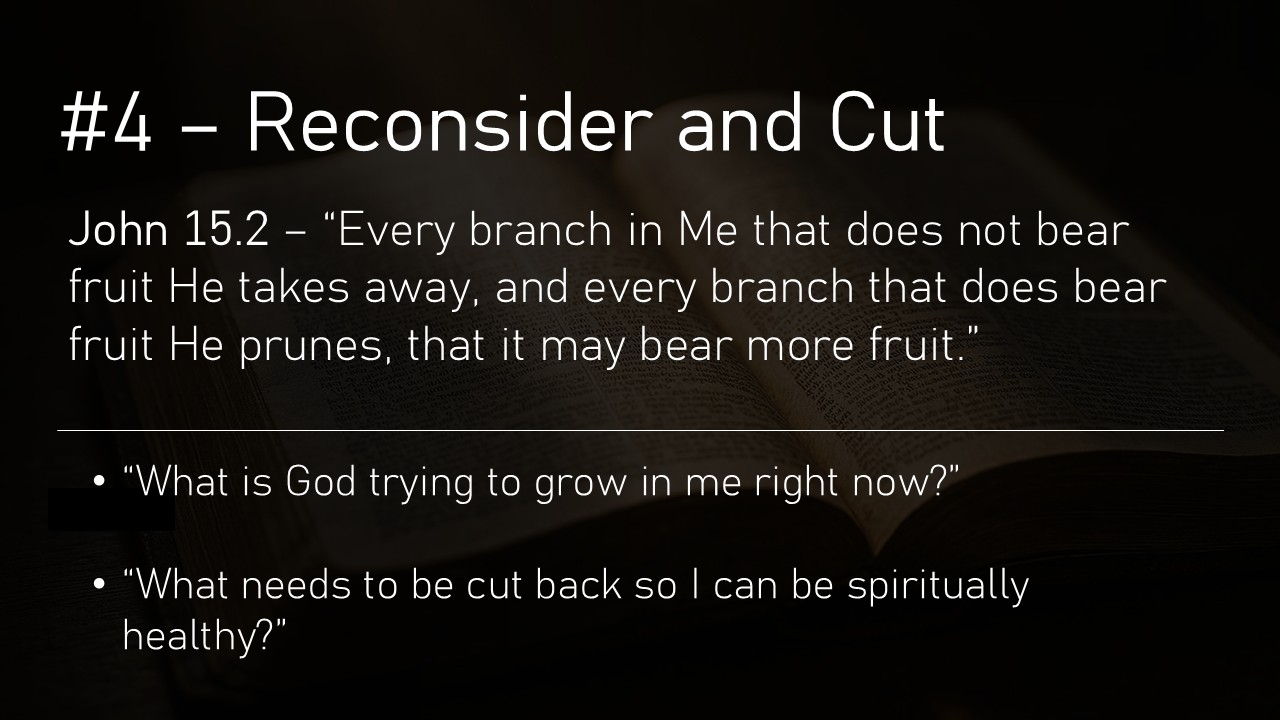
#4 – Reconsider and Cut

God is not only interested in growth—He’s interested in more growth. “Every branch… that does bear fruit He prunes, that it may bear more fruit” (John 15:2). Ask: “What is God trying to grow in me right now?” Then ask: “What needs to be cut back so I can be spiritually healthy?” Pruning can feel painful, but it’s proof God is working.

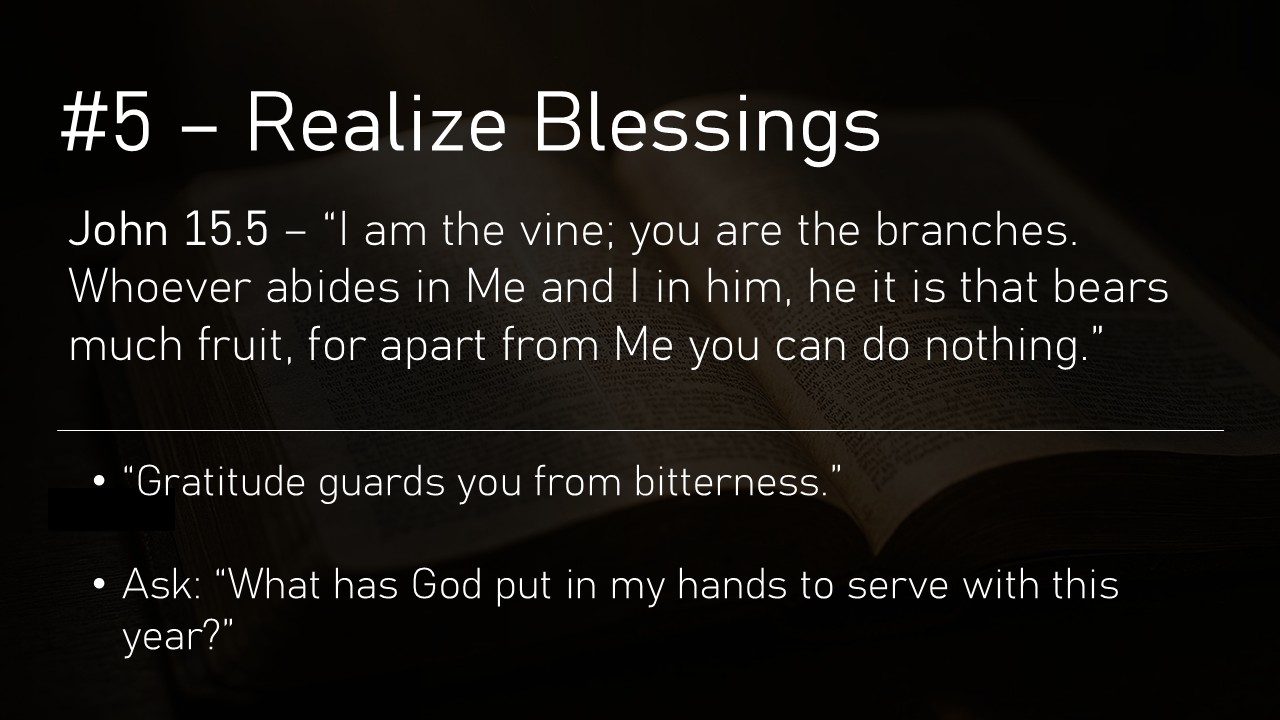
#5 – Realize Your Blessings

Gratitude guards you from bitterness. When we forget what God has already done, discouragement gets louder. Pause and ask: “What has God put in my hands to serve with this year?” Blessings aren’t only comforts—they’re tools for ministry.

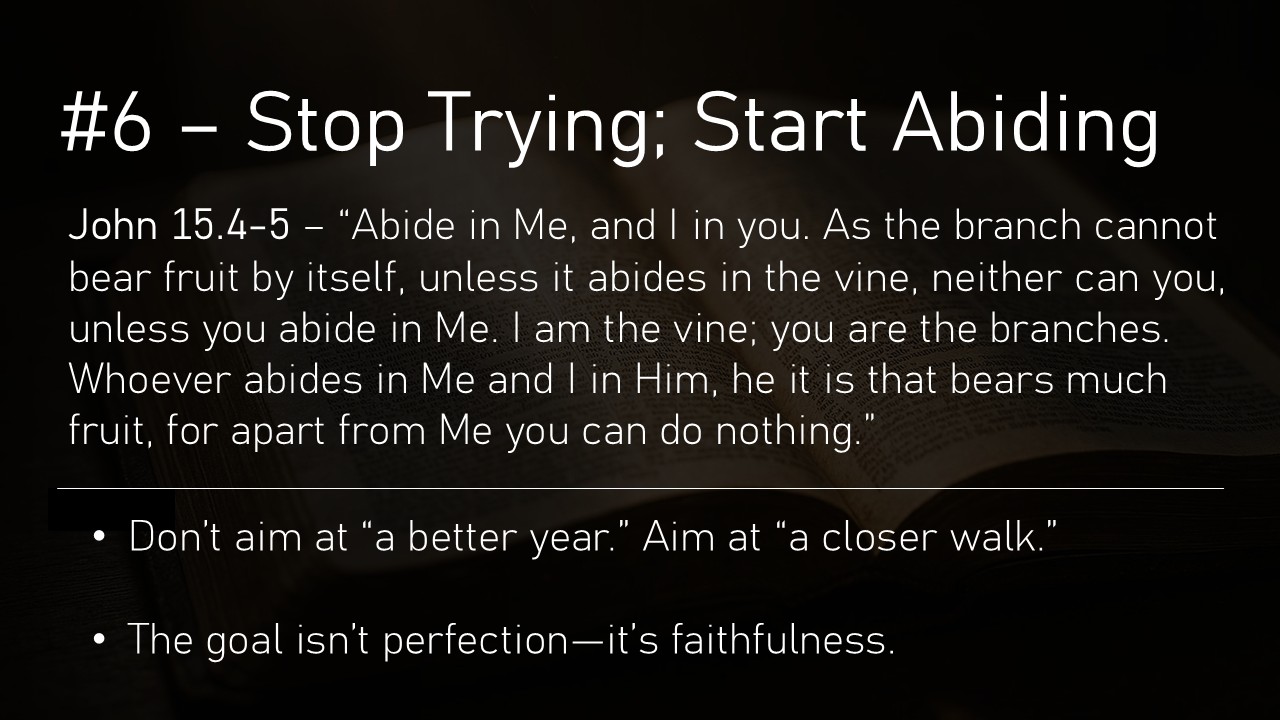
#6 – Stop Trying; Start Abiding

The goal isn’t perfection—it’s faithfulness. Don’t aim at “a better year.” Aim at “a closer walk.” Jesus’ words are clear: “Apart from Me you can do nothing” (John 15:5). But with Him, fruit is possible—steady, lasting, and God-glorifying.

As you step into a new season, don’t just set resolutions. Set your heart to remain in Christ. A fruitful year begins where every good thing begins: abiding in the Vine.

Happy New Year!

Just some thoughts,


New Beginnings (A Quick Look into Genesis)

Genesis is often called the book of beginnings. In its pages we see the beginning of the world (Genesis 1–2), the beginning of sin (Genesis 3), the beginning of family life and childbirth (Genesis 4), and even the beginning of nations (Genesis 10–11). As a new year sits in front of us, Genesis helps us to see fresh starts the way God sees them: not as wishful thinking, but as real opportunities to walk with Him.

First, Genesis reminds us that God brings beginnings out of nothing. “In the beginning God created the heavens and the earth” (Genesis 1:1). In seven days, the Lord formed light and darkness, sky and seas, land and vegetation, sun and moon, birds and fish, animals and man — then He rested (Genesis 1:3–2:3). Who else can take nothing and make something?

Every sunrise, every season, and every breath is a quiet reminder that God is powerful, purposeful, and generous.

Second, Genesis shows that God can give a new beginning after great failure. In Noah’s day, evil filled the earth (Genesis 6:1–5, 11–12). However, God saw Noah as a righteous man and preserved him and his family (Genesis 6–8). After the flood, God made a promise and set a rainbow as a sign (Genesis 9). Righteousness still matters, and God still honors it.

Third, Joseph teaches us that new beginnings don’t always feel “new” at first. Betrayed and taken to a foreign land, Joseph’s path looked like loss, but God used it for blessing. Even Pharaoh recognized God’s hand in him (Genesis 41). Joseph’s faithfulness positioned him to save his family (Genesis 46–50).

So, what about our new beginning? Every day is a gift — “If the Lord wills” (James 4:15). Tomorrow isn’t promised (Luke 12:13–21). Today is the day to seek forgiveness, share the gospel, and set our lives in order.

The greatest new beginning is becoming a new person in Christ (John 3; Ephesians 2). God offers salvation daily. What will your response be?

Just some thoughts,


It’s Easier to Keep Holidays Than Commandments

“How many observe Christ’s birthday! How few, his precepts! O! ’tis easier to keep holidays than commandments.” — Benjamin Franklin

That quote stings—because it’s true often enough to make us uncomfortable.Every year, Christmas arrives with lights, music, traditions, and a calendar that almost forces us to pause. And there’s nothing wrong with celebrating. Remembering the coming of Jesus into the world is a beautiful thing.

But Franklin’s point is worth sitting with: it’s easier to observe a holiday than it is to obey a Savior.

Holidays are simple. Discipleship is daily.

A holiday asks for a moment. A commandment asks for a life. It’s one thing to sing about peace on earth. It’s another thing to pursue peace when you’re misunderstood, overlooked, or hurt.

Jesus didn’t come merely to be admired once a year—He came to be followed every day. Remember these verses…

    • “If you love Me, you will keep My commandments.” (John 14:15, ESV)
    • “Why do you call me ‘Lord, Lord,’ and not do what I tell you?” (Luke 6:46, ESV)

Don’t soften that. Jesus is not asking for seasonal affection. He is calling for daily obedience.

Here’s the direct challenge:

Are you obeying Jesus—or just observing Him?

It’s possible to honor Jesus with our words while ignoring Him with our choices. The Pharisees were told, “This people honors Me with their lips, but their heart is far from Me.” (Matthew 15:8, ESV)

So let’s make it plain: If your faith is strongest in December but weak in January, you’re not celebrating Christ—you’re compartmentalizing Him.

Christmas can become a spiritual substitute: something that feels meaningful but doesn’t actually change you.

Commandments aren’t chains—they’re the proof of who is the Lord’s

We live in a time that loves inspiration but resists instruction. We want comfort without correction. But Jesus doesn’t offer a “holiday Jesus.” He offers a King.

    •  “Not everyone who says to Me, ‘Lord, Lord,’ will enter the kingdom of heaven, but the one who does the will of my Father who is in heaven.” (Matthew 7:21, ESV)

That verse isn’t there to make tender hearts panic. It’s there to keep careless hearts from pretending.

And yes—when we fail (because we do), the answer isn’t to quit. It’s to repent and return.

    • “If we confess our sins, He is faithful and just to forgive us our sins and to cleanse us from all unrighteousness.” (1 John 1:9, ESV)

Five “after-Christmas” commandments to measure your walk

If you want to honor Christ beyond the season, don’t start with vague intentions. Start with obedience you can actually practice.

    • Love God first: “You shall love the Lord your God with all your heart and with all your soul and with all your mind.” (Matthew 22:37, ESV)
    • Love people in a way they can feel: “A new commandment I give to you, that you love one another: just as I have loved you…” (John 13:34–35, ESV)
    • Forgive instead of keeping score: “Forgive, and you will be forgiven.” (Luke 6:37, ESV)
    • Seek the Kingdom before comfort: “But seek first the kingdom of God and His righteousness…” (Matthew 6:33, ESV)
    • Do the Word, don’t just consume it: “But be doers of the word, and not hearers only, deceiving yourselves.” (James 1:22, ESV)

Those aren’t “nice ideas.”

They’re commands.

And they reveal who’s really on the throne.

A 7-day obedience test (no excuses)

Here’s your challenge for this week:

  1. Pick one command of Jesus you’ve been delaying.
  2. Write it down.
  3. Pray for strength.
  4. Obey it today—then repeat for 7 days.

Not perfectly. But honestly.

Because discipleship isn’t proven by what you post, what you sing, or what you attend.

    • “If anyone would come after Me, let him deny himself and take up his cross daily and follow Me.” (Luke 9:23, ESV)

That word daily makes it real.

Celebrate the birth of Jesus—then live like He’s Lord

Christmas reminds us that God stepped into our world. That’s worth celebrating.

But the best way to honor Christ isn’t only with a day on the calendar.

It’s with a life that says, “Jesus, you’re not just part of my season—you’re the center of my life.”

So yes—keep the holiday.

But even more: keep the commandments.

Not out of guilt.

Out of love.

And if you’re ready to get serious, don’t wait for a new year. Obedience doesn’t need a fresh calendar—just a surrendered heart.

Just a thought,

Immanuel: Where Many Miss Jesus

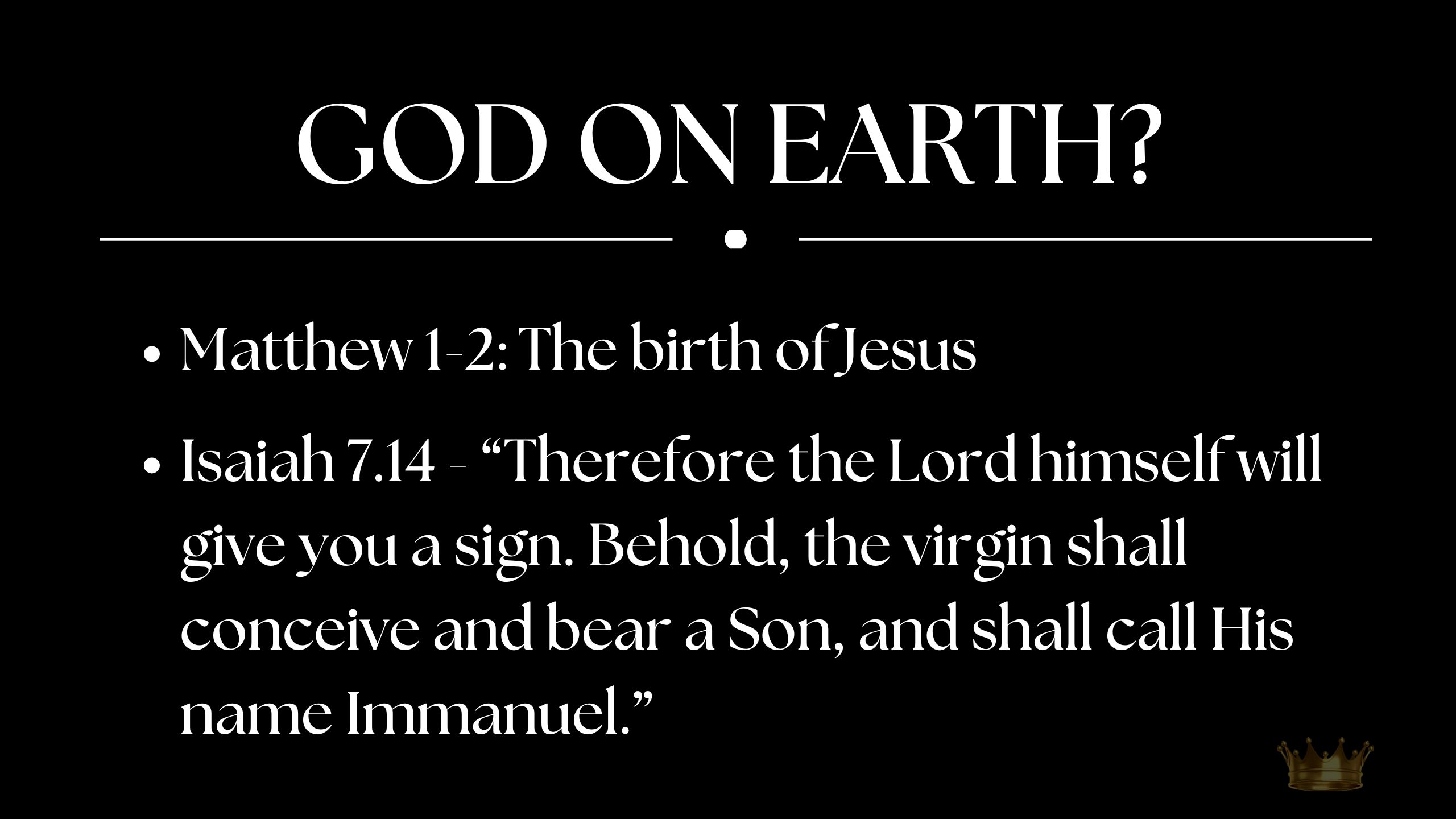
The story of Jesus’ birth is one of the most familiar in Scripture, yet it remains one of the most overlooked. Not because people haven’t heard it, but because they often miss the meaning behind it. Matthew opens his Gospel with a truth so profound that it reshapes the entire biblical story: “They shall call His name Immanuel,” which means “God with us.” (Matthew 1:22–23). Those three words—God with us—carry the weight of God’s promise, God’s heart, and God’s desire for His people from the very beginning.

Immanuel is not simply a name; it is a declaration. Jesus is God’s promise to be present with His people. For generations, Israel had waited for God to act, to speak, to restore. And in the birth of Jesus, God did more than send a message—He came Himself. Matthew 1–2 shows us that the arrival of Jesus was not random or accidental. It was the fulfillment of Isaiah 7:14, where God promised a sign: a virgin would conceive and bear a Son, and His name would be Immanuel. God was not content to remain distant. He stepped into the world He created.

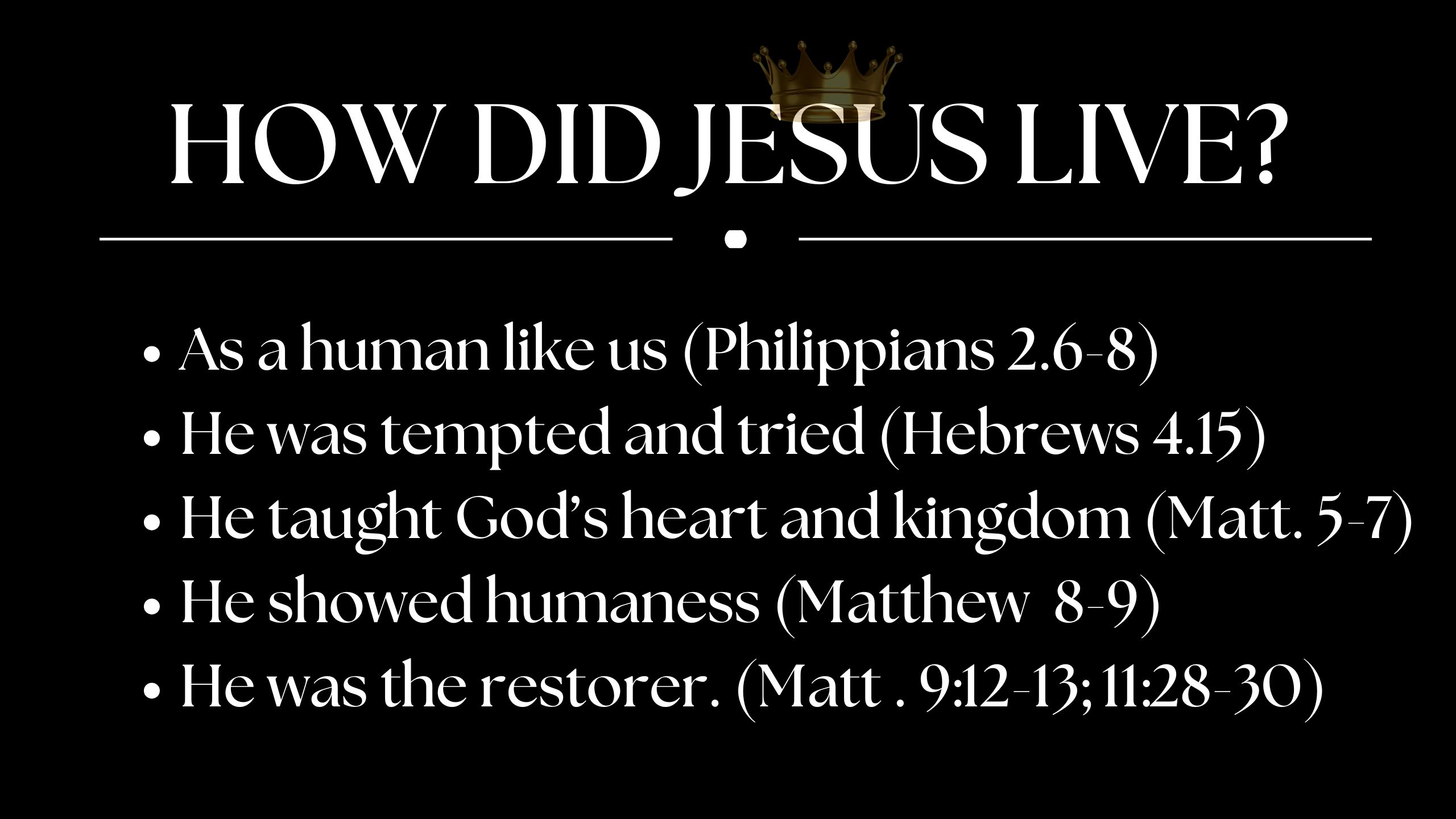
But the miracle of Immanuel is not only that God came near—it is how He came near. Jesus lived as one of us. Philippians 2:6–8 reminds us that He took on human form, embracing humility and obedience. He faced temptation and trials (Hebrews 4:15), not from a distance but from within the human experience. He taught the heart of God and the values of the kingdom in Matthew 5–7, revealing what life with God truly looks like. He showed compassion, tenderness, and humanity in Matthew 8–9 as He healed, touched, restored, and noticed those the world ignored.

Jesus didn’t just preach God’s presence—He embodied it.\

He restored what was broken. In Matthew 9:12–13, He declared that He came for the sick, not the healthy. In Matthew 11:28–30, He invited the weary and burdened to find rest in Him. Jesus was not a distant Savior; He was the restorer, the healer, the One who brought God’s mercy into everyday life.

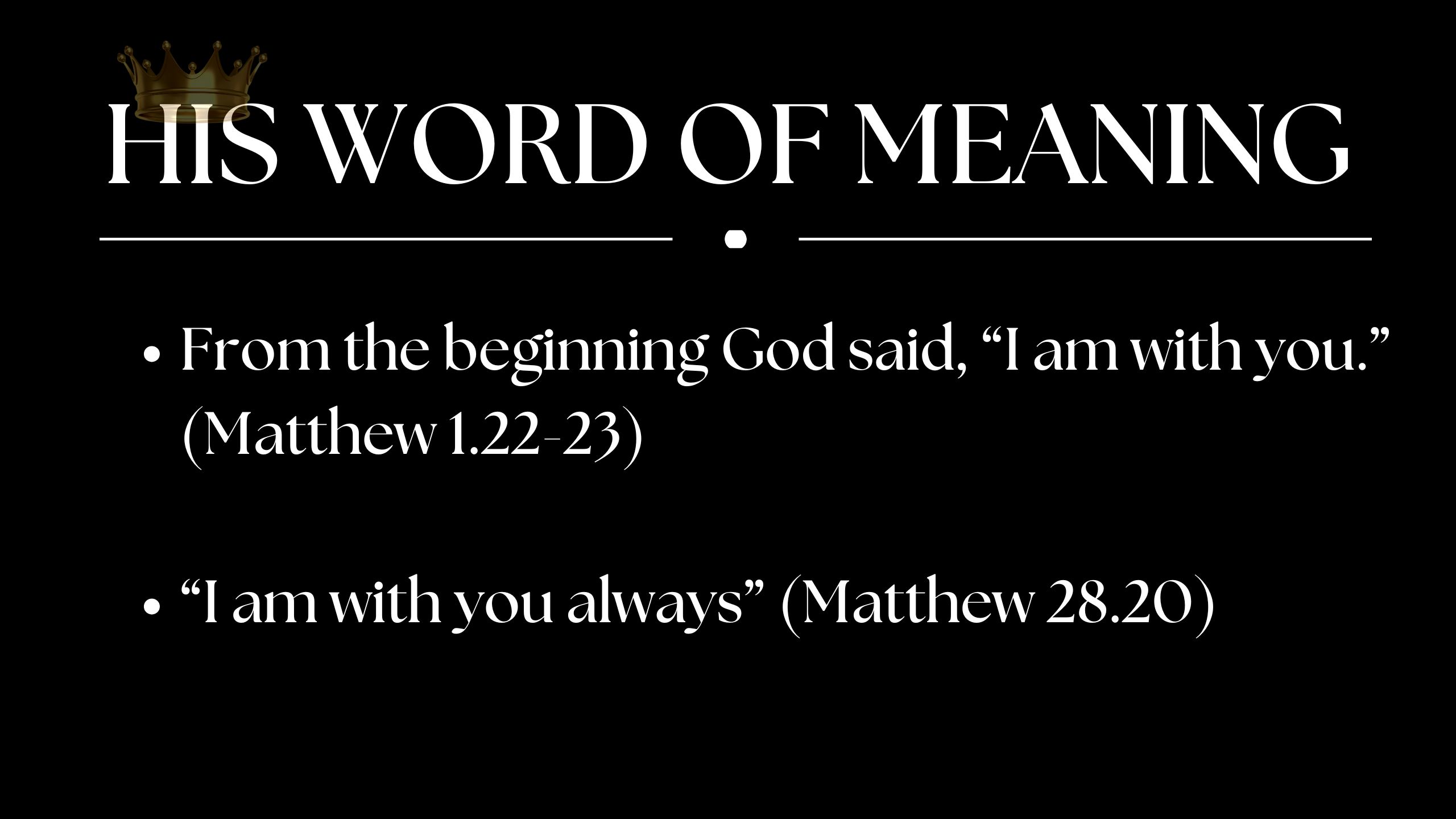
And from the beginning to the end of Matthew’s Gospel, one message remains unchanged: God is with you. The Gospel opens with the promise of Immanuel (Matthew 1:23) and closes with Jesus’ final words: “I am with you always, to the end of the age.” (Matthew 28:20). The presence of God is not seasonal. It is not limited to a manger scene or a moment in history. It is the ongoing reality for every believer.

Where many miss Jesus is not in the story of His birth, but in the significance of His presence. God has always wanted relationship, faithful love, and a people who walk with Him. Jesus is the fulfillment of that desire.

Immanuel means you are not alone. God has come near. God is present. God is with us—still.

Just some thoughts,

Some Christmas Season Thoughts

As Christmas approaches, this is a meaningful time to strengthen relationships with both your physical family and your spiritual family. Christmas has a way of gathering people together, but it also reminds us how much we need one another. Here are a few simple, practical ways to lean into that blessing while keeping our minds on the Lord.

Put down the phone and be present. Choose a face-to-face conversation over another scroll or text. Nothing replaces kind words spoken in person and sincere attention given to someone you love. This season is a great time to practice genuine love and honor within the home. (Romans 12:9–13)

Worship with the saints—and bring someone with you. When family visits, invite them to join you for worship and time with the church. Christmas can open doors for spiritual conversations that might not happen any other time of year. And for many, this season can be heavy on hearts—people need their spiritual family more than they may admit. “Let us consider how to stir up one another to love and good works…” (Hebrews 10:24)

Read the Word with fresh Christ-filled eyes. Christmas is a powerful opportunity to point hearts back to Jesus. Take time before the day arrives to read (or reread) the story of Christ and the hope He brings. Like the Bereans, let’s be people who search the Scriptures with readiness. (Acts 17:11) Consider reading Luke 2, Matthew 1, John 1, and Isaiah 9:6–7.

Serve in ways that reflect the love of Christ. Christmas creates countless opportunities to serve—preparing food, checking on someone who may be lonely, helping a member in need, or quietly meeting a need without being asked. These moments may feel small, but they honor the Lord. “Let us do good to everyone, and especially to those who are of the household of faith.” (Galatians 6:10)

The Lord blesses us with many opportunities every year, but Christmas has a special way of putting them right in front of us. Let’s use this season to strengthen our relationships—and to keep Christ at the center of it all.

Just a thought,

Don’t miss the newsletter!

We don’t spam! Read more in our privacy policy