Do you remember the Bible of your grandparents? Maybe you remember the Bible of your parents? Do you remember their old, worn out Bible?
It does not matter if it was a $10 Bible from the General Store or from Walmart, but you remember that old, worn out Bible. Today, every Christian needs one of those old, worn out Bibles.
A worn-out Bible is a well-read, well-studied Bible. It has been read, studied, carried, shared and used. A well-worn Bible usually lives in the home of a studied Christian. The hours of reading of the sacred text can be seen in the worn pages, the cracks in the cover and the break in the binding.
With the age of technology, we have been blessed with the ability to carry a Bible wherever we go. Instead of carrying a scroll, like the first century (Luke 4.17-20; Acts 8.28), we can carry all 66 books in different electronic forms.
The blessing of having the inspired word of God is something every Christian needs to appreciate daily.
How do you get a worn-out Bible?
You will get a worn-out Bible when you open it daily and use it. Reading through the Bible each year will break your Bible in but studying your Bible will begin to do much more. Studying your Bible will result in many pages being turned and pages being worn out.
The more you discover in the Bible, the more you will want to dig into its message. You will find the Word of God to be living, active and piercing our souls and our minds (Hebrews 4.12).
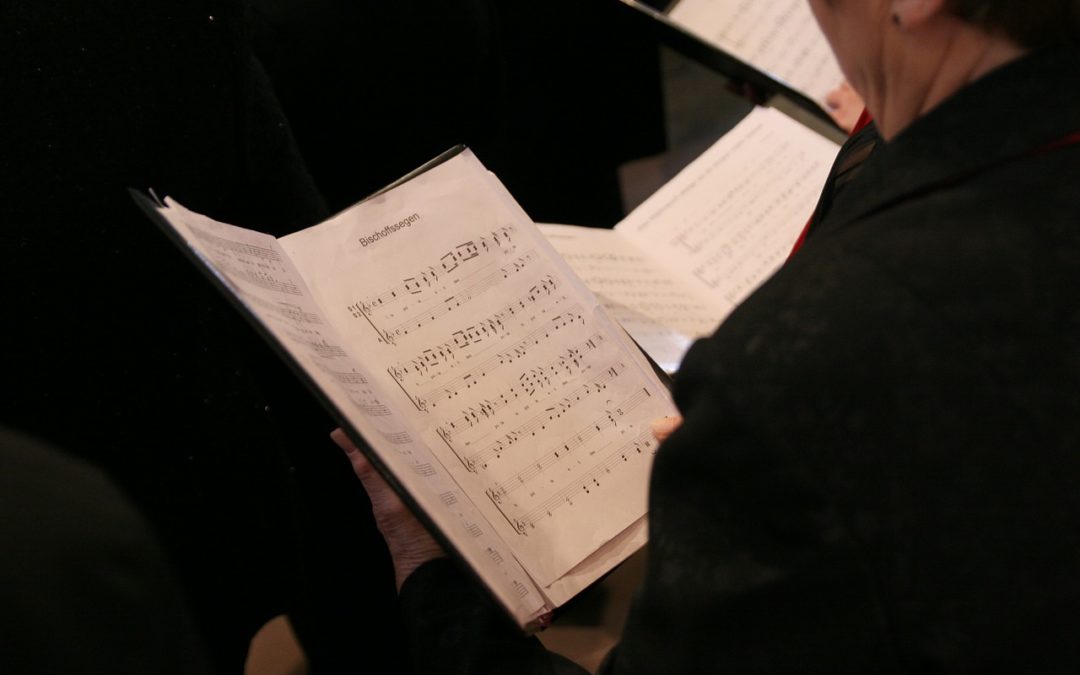
Singing is powerful aspect of our worship that motivates one to a greater attitude and a greater desire to worship. Music has a tendency to transport the mind into a higher realm.
In 1780, John Wesley published his rules for singing as a part of a hymnal he produced that same year.. The list is fascinating and the points apply to this year even more than the year they were written. The list is contained below:
Learn these tunes before you learn any others; afterwards learn as many as you please.
Sing them exactly as they are printed here, without altering or mending them at all.
Sing all. See that you join with the congregation as frequently as you can.
Sing lustily and with a good courage. Beware of singing as if you were half dead, or half asleep.
Sing modestly. Do not bawl, so as to be heard above or distinct from the rest of the congregation.
Sing in tune. Whatever time is sung, be sure to keep with it. Do not run before or stay behind it. Take care not to sing too slow.
Above all sing spiritually. Have an eye to God in every word you sing. Aim at pleasing him more than yourself, or any other creature. In order to do this attend strictly to the sense of what you sing.
A few years before the hymnal was published, Mr. Wesley wrote his views on a new song in a journal entry dated, July 3, 1764,
“I seldom relish verses at first hearing. Till I have heard them over and over, they give me no pleasure, and they give me next to none when I have heard them a few times more, so as to be quite familiar.”
I find it interesting that emphasis John Wesley put on singing. He knew there are something about worshipping God in song that brought delight to the worship of God.
Every week, across our brotherhood, sermons are presented, and Bible classes are taught. During those few hours each week, some people gain more insights than others. While it may be said that we should not come “looking for something”, we should come ready do worship the Almighty. If we have the proper mindset there is still something to be gained from the lessons.
Consider these few questions to see if they can help you “get something” from the lessons:
Why did you come to worship or Bible class?
The way we approach worship will determine our experience and our learning capacity. Ask yourself, “Am I coming to join with the saints and worship God the Father?” Are you coming together with others to praise God or just to “get something” out of the day? If someone comes to worship to find a self-pleasing ritual, then worship will not be God-centered.
What are you putting into the sermon or Bible class?
When you come to the assembled worship or Bible Class time, have you prepared your mind to learn? Our mindset will say much about our ability to learn. Are you opening your Bible and following along, or even taking notes to examine later? The old saying is, “you get out what you put in.” Are you putting effort into learning?
Where was your mind during the sermon or Bible class?
When you are listening are you thinking of how to apply the points of the message in your daily life? Once again, listening goes back to mindset. Are you focusing on the worship of God or things outside of worship?
If you were asked to describe the Bible, what words would you use?
In the front of a Bible given to me when I graduate high school, the words below are found. Let them stir your mind on how you will describe the Bible when someone asks.
This book reveals the mind of God, the state of man, the way of salvation, the doom of sinners, and the happiness of believers. Its doctrines are holy, its precepts are binding, its histories are true, and its decisions are immutable.
Read it to be wise, believe it to be safe, and practice it to be holy. It contains light to direct you, food to support you, and comfort to cheer you. It is a traveler’s map, the pilgrim’s staff, the pilot’s compass, the soldier’s sword, and the Christian’s character. Here, too, heaven is opened, and the gates of hell disclosed. Christ is its grand subject, our good its design, and the glory of God its end.
It should fill the memory, rule the heart, and guide the feet. Read it slowly, frequently, prayerfully. It is a mine of wealth, a paradise of glory, and a river of pleasure.
It is given you in life, will be opened at the judgement, and be remembered forever. It involves highest responsibility, will reward the greatest labor, and condemn all who trifle with its sacred contents.
Owned, it is riches; studied, it is wisdom; trusted, it is salvation; loved, it is character; and obeyed, it is power.
Moments of history have a way of helping us to understand spiritual truths. While we know they are different, various world events become seared in our minds and illustrate a spiritual point.
On June 5, 1944, a photograph was taken of General Dwight Eisenhower which tells a rich story as the invasion of Normandy was to come the next day.
The 101st Airborne Division was stationed in Greenham Common, England when General Eisenhower spoke to them. During his message to the troops, the commander said, “Full victory – nothing else.”
Those words, “Full victory – nothing else” describe the life of a Christian. They also described the sacrifice of Jesus. In Matthew 16, Jesus told his disciples that the “gates of Hell” would not prevail against the church. Those words are words of full victory – nothing else.
Christ’s death brought us full victory.
“Oh death, where is your victory? Oh death, where is your sting? The sting of death is sin, and the power of sin is the law. But thanks be to God, who gives us victory through our Lord Jesus Christ.” (1 Corinthians 15.56, 57)
Christians are preparing for their eternity in heaven because of the full victory Christ offers.
He paid the price.
He was our sacrifice.
In the end, He wins.
So, because we know the end of all things, let us…
“…be steadfast, immovable, always abounding in the work of the Lord, knowing that in the Lord your labor is not in vain.” (1 Corinthians 15.58)
“You shall not curse the deaf or put a stumbling block before the blind, but you shall fear your God: I am the LORD.” (Leviticus 19.14; ESV)
Most will read over this verse and never pay it much thought, but upon considering the ramifications of this verse, the eternal nature of the Lord is clearly seen in the actions of the obedient.
Consider this, if you curse a deaf person, will he even hear it?
The answer is, “No.”
Leviticus 19.14 is a relationship verse; both our relationship to God as well as our relationship to each other.
Clearly a deaf person will not hear a cursing from your lips, but the Lord will. The Lord will see when you do not respect your fellow man and when you are not doing what is right before Him. Our words regarding others when they are not around is nothing more than a reflection of our hearts.
Our words are a reflection of our relationship with the Lord!
God is clear in His word about how we are to treat others. Gossiping and speaking behind others backs does nothing but fuel the fires of negativity and destroys everything. Yes, I said everything.
Each of us know relationship which have been utterly destroyed because of gossip and backbiting. I am sure some can name families that have split, marriages divided and congregations destroyed over gossip and backstabbing. Even King Solomon knew this when he said, “For lack of wood the fire goes out, and where there is no whisperer, quarreling ceases” (Proverbs 26.20; ESV)
Questions for a lifetime:
1. Each day, do you spend more time talking about people or to people?
2. When you pray, do you spend more time praying about others or more time praying for others?
3. Do you spend time tearing people down with gossip or building them up with exhortation?
Remember, a “true friends says nice things behind your back.”